
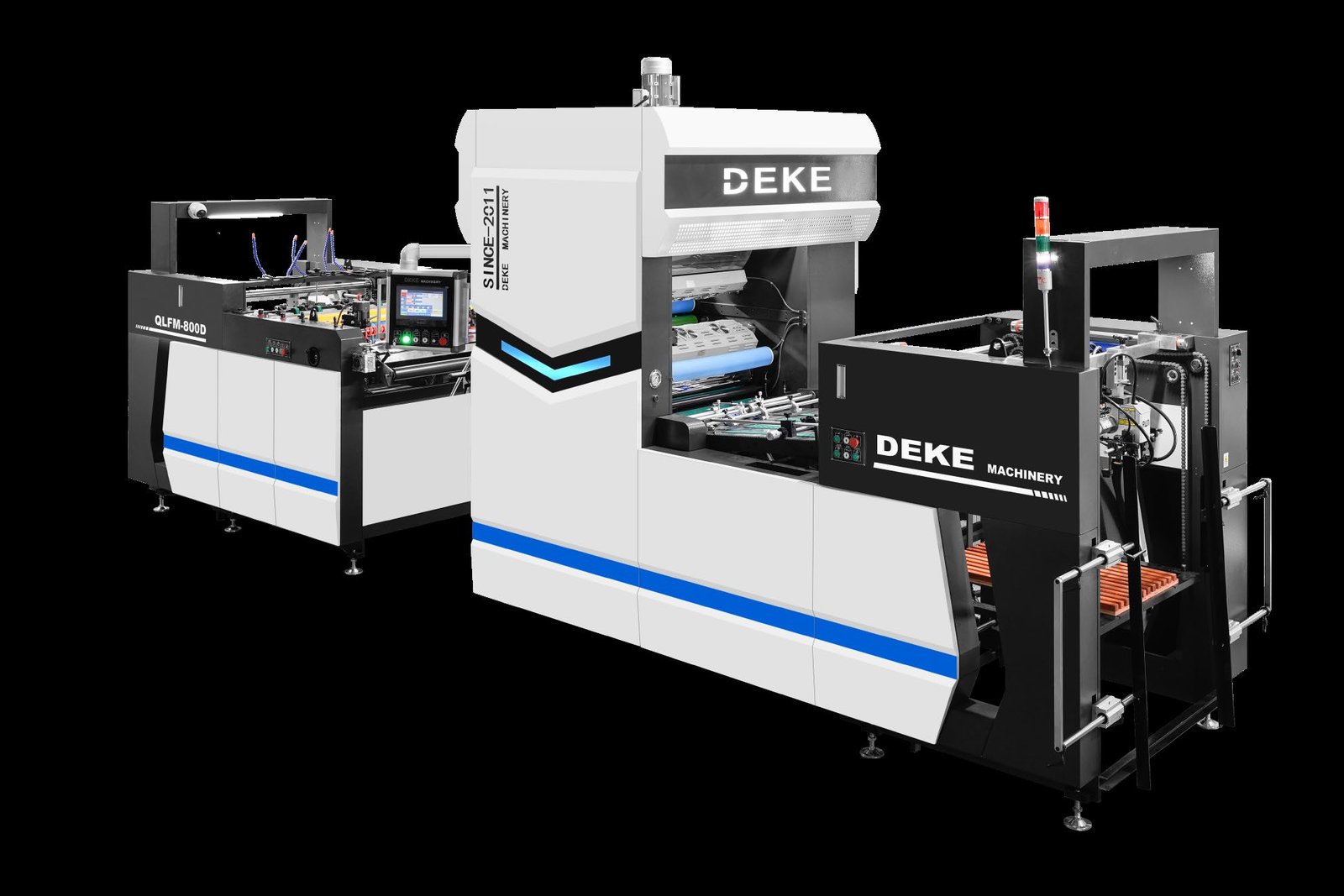
Sheet-Fed vs. Roll-Fed Laminating Machines: How to Choose
When buyers first approach us, the question is usually the same: sheet-fed or roll-fed? Both families are vertical laminating machines and both are built on the 2026 D platform, but they are matched to different workflows. Here is how to think about the choice.
Sheet-fed — the QLFM series
The QLFM range feeds pre-cut sheets. It is the natural fit for printers and carton plants that already work in sheets: the machine takes paper from 80 to 600 gsm, handles a minimum sheet down to 300×300 mm, and stacks finished sheets up to 1000–1300 mm high. Models run from the QLFM-800D up to the QLFM-1860D, and functional suffixes add de-powdering (-F), a chain knife (-L), a hot knife (-R), sheet-plus-roll operation (-PJ) or sheet feeding with roll rewinding (-DJ).
Roll-fed — the JLFM series
The JLFM range feeds from a paper roll instead of a stack. It suits higher-volume work where the paper arrives on rolls and continuous feeding is an advantage. Because the input is a roll, the JLFM specification tracks roll diameter (up to 1300 mm) and roll weight (up to 2000 kg) rather than sheet-stacking height; widths run from the compact JLFM-520D up to the steam-heated JLFM-2550D, with a -J roll splicer available on the larger frames.
A simple rule of thumb
If your paper is already cut to sheet and your jobs change size often, start with QLFM. If you buy paper on rolls and run long, steady volumes, look at JLFM. If you genuinely need both, the QLFM -PJ models handle sheet and roll on one machine. Tell us your paper size, gsm and target output and we will narrow it down with you.